Subtotal: 0
View Cart

About Parallax

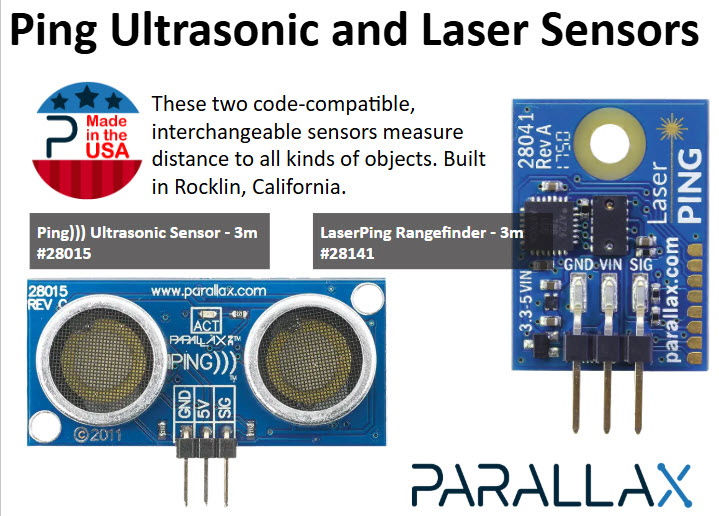
Parallax, Inc. is a privately held company located in Rocklin, California. Parallax designs and manufactures microcontroller development tools and small single-board computers that are used by electronic engineers, educational institutions, and hobbyists. Our current product line consists of BASIC Stamp® & Propeller Chip microcontrollers and development software, SX chips and programmers/debuggers, project boards, sensors, educational tools, robotics kits and accessories, and Propeller chips and tools

A Brief History of Parallax

Customers often ask about the origins of Parallax, Inc the motivation behind the creation of our products and the long-term products we will make available for customer designs.

At the age of 13 In 1981 Chip Gracey had his first major introduction to programming and electronics: the Timex Sinclair computer. Chip's influential junior high computer teacher Bob Wofford in the Winston Churchill Intermediate Sacramento, California school put Chip to work teaching the other students. It was apparent that Chip's technical skills were a passionate interest. In 1980 Chip's father Chuck brought home an Apple II computer and a green text monitor for the weekend. Chip was fascinated by the new machine, writing BASIC code to display graphics and removing the case to see the electronic components. The computer had to return to his father's office every Monday, giving Chip time to plan his next weekend programming project.

These experiences quickly led to dismantling video game source code and household electronic hardware, and trying to use these devices for purposes other than originally intended. Hobby transformed into a business, and by the time he was a senior in high school Chip was running a small business called Innovative Software Engineering (ISE) from his bedroom. ISE made a software duplication hardware for the Commodore 64 computer called the ISEPIC (no relation to PICmicros). Within a year Chip sold 20,000 ISEPICs around the world, largely by word of mouth at local computer clubs and niche magazines.

High schools offered no software or hardware classes in 1983, and when Chip graduated in 1986 college just didn’t seem like the right place to start running a business. Instead, he and a friend Lance Walley started Parallax from their apartment. Lance brought practical skills in writing, graphics and programming to the team. Lance was responsible for arranging company infrastructure, creating some of his own technical products and making Chip's creations sellable. The two assembled a Board of Directors with an accountant, attorney and an engineer. This Board of Directors provided positive direction for Chip and Lance, keeping them out of trouble but also arranging the different legal operating aspects of a new business.

Their first products included sound digitizers for the Apple II, the II/64 Apple II programming hardware and 8051 programmers. In 1990 Parallax released Microchip's first 3rd party PIC Programmer. The PIC programmer product grew quickly to include the Mathias emulator. While the first version of our PIC programmer was sold to Microchip, our subsequent revision sold 12,000 units over the next six years.

Chip's experience with PIC programming led to the first BASIC Stamp® module release in 1992. The BASIC Stamp microcontroller was so named because it was small in size, like a postage stamp. The release of the BASIC Stamp microcontroller transformed the company from three to five employees. The business grew slowly until 1992 when Parallax released the first BASIC Stamp module. Parallax knew the BASIC Stamp microcontroller would be special – it was the tool they needed to do their own hobby projects. The fact that the BASIC Stamp module would create its own industry was probably unknown by Parallax founders, but it quickly became apparent that the small computer had its own group of enthusiasts. It let ordinary people program a microcontroller for the first time, and gave them powerful I/O commands that made it easy to connect to other electronic components. The user base was tremendously diverse, including everything from scientists and hobbyists to engineers and entrepreneurs. By the end of 1998 Parallax sold over 125,000 BASIC Stamp modules and distributed a complete series of supporting peripherals through over 40 world-wide sales channels. By 2002 there were over three million BASIC Stamp microcontrollers in use and the reliability track record was evident to our customers.

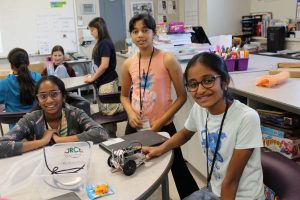
With young Chip in mind we created Parallax’s Stamps In Class™ program in 1997. Until that time there were very few educational resources that addressed the needs of the high school age electronic student. Our comprehensive Stamps In Class curriculum is designed to introduce students and educators to BASIC Stamp microcontrollers using software basics and simple hardware, integrating the two without a tremendous investment (the curriculum is free and Parallax has educational prices for the hardware). It starts from the bottom, with hands-on projects and programming, and works its way up to more advanced programming and Industrial Control.


Timeline

The BASIC Stamp microcontroller was envisioned by Parallax founders to bring the power of microcontrollers to ordinary people. Parallax knew the BASIC Stamp microcontroller would be special - it was the tool we wanted for our own hobby projects. When hobby transformed into business we developed a manufacturing facility, distribution network, off-shore relationships and of course a high-quality office team.

2006 - Parallax releases the Propeller chip. The Propeller represents the first custom all-silicon product designed by Parallax.

2004 - Parallax becomes Master Distributor of the SX Microcontroller and a distributor for FTDI. Parallax Forums replaces all Parallax-related Yahoo! Discussion Groups. RadioShack stocks the Boe-Bot robot in retail stores and online. Key new products consist of the USB Board of Education carrier board, Parallax Servo Controller (PSC), and the Parallax Digital Oscilloscope.

2003 - PBASIC 2.5 is made available through the new BASIC Stamp Windows Editor v2.0. BS1-IC is now programmable in the Windows environment instead of DOS. Popular products such as the Stamp PLC, Memsic Accelerometer, and EmbeddedBlue AppMod (Bluetooth) are released. Stamps in Class program announces availability of Understanding Signals and Elements of Digital Logic guides.

2002 - In a partnership with Altera Parallax releases the Smart Pack FPGA development tool.

2001 - The new BASIC Stamp 2p 24 - and 40-pin modules are released.

1999 - World-wide BASIC Stamp Educator’s Courses begin to train instructors on the use of the BASIC Stamp microcontroller in education. Over 1,500 educators are trained in BASIC Stamp microcontroller.

1998 - Parallax launches Stamps in Class educational program. Experiments for robotics, analog and digital and process control are  developed. Additionally, Parallax forms partnership with Scenix Semiconductor (Ubicom) to develop tools and BASIC Stamps using their new SX microcontrollers.

1997 - Parallax sells intellectual interests in programmers and emulators for the Microchip market (to Tech Tools) in order to concentrate on BASIC Stamp microcontrollers.

1995 - BASIC Stamp 2 module is released amid much excitement and long-standing backorders around the world.

1993 - Parallax designs and manufactures ClearView 5x/xx and Mathias, a hardware emulator for Microchip controllers. The Parallax BASIC Stamp microcontroller is a finalist for EDN’s “Innovation of the Year” award.

1992 - Original BASIC Stamp 1 Rev. D released in through-hole format on PCB with prototype space and battery clip. Parallax develops international distribution.

1990 - Parallax creates the first 3rd party Microchip PIC programmer. PIC Programmer is later sold to Microchip (1992).

1987 - TopRAM, a 1 Megabyte Memory Card for your Apple IIGS, is released.  Parallax becomes Incorporated in Sacramento, California, on September 4, 1987.

1986 - ISEPIC (say “Icepick”) software duplication device released for Commodore 64 computers.

Home    |    Contact Us    |    Job Opportunities    |    About Parallax    |    Privacy Statement    |    Terms Of Use    |    Copyright 2007 by Parallax, Inc.